


Born 8 Weeks Early: Triplets Return Home After Specialised NICU Care at Emirates Specialty Hospital
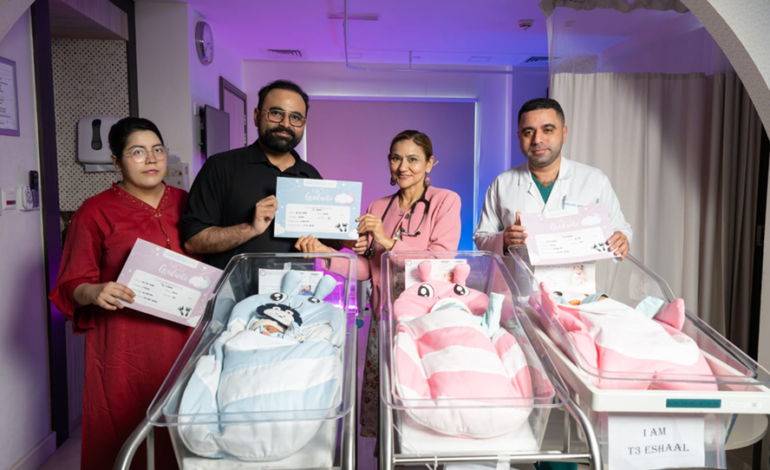

Three premature babies return home after approximately one month of specialised neonatal care, highlighting the importance of coordinated maternity care, multidisciplinary teamwork and family-centred support.
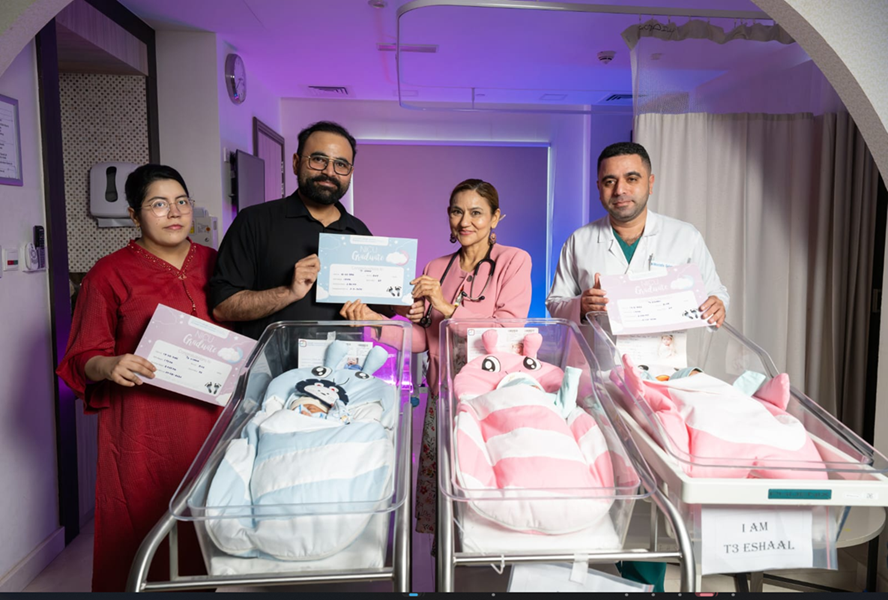
Dubai, UAE – October 2026: Born 8 weeks before their expected due date, three premature babies faced a challenging start to life, requiring specialised neonatal intensive care at Emirates Specialty Hospital in Dubai Healthcare City. What began as a high-risk pregnancy, closely monitored by obstetric and fetal medicine specialists, developed into an unexpected premature delivery. After approximately one month of dedicated medical and nursing care, all three newborns were discharged home, marking an emotional milestone for their parents and highlighting the importance of coordinated medical care in managing complex multiple pregnancies.
For parents Omar and Sahrish Iqbal, the prospect of welcoming triplets brought excitement and anticipation, but also significant medical challenges. Throughout the pregnancy, the mother required frequent antenatal consultations, ultrasound assessments and close monitoring to evaluate the babies’ development and identify potential complications.
Dr. Anfal Akram Al Mashaykhi, Specialist in Obstetrics and Gynecology at Emirates Specialty Hospital, worked closely with Dr. Mandeep Singh, Fetal Medicine Specialist, to provide coordinated antenatal care, assess maternal and fetal wellbeing, discuss available treatment and management options, and guide the family through each stage of the high-risk pregnancy.
Dr. Anfal explained that triplet pregnancies require particularly careful management because of the increased risk of premature delivery, low birth weight, differences in fetal growth and maternal complications, including anemia, hypertension and gestational diabetes.
“Managing a triplet pregnancy requires a structured, multidisciplinary approach, with frequent antenatal assessments and individualised clinical planning. Throughout this pregnancy, Dr. Mandeep Singh and I worked closely together to monitor maternal and fetal wellbeing, review ultrasound findings, assess potential complications and discuss appropriate management and treatment options with the parents. This continuity of care is particularly important in high-risk pregnancies, where clinical circumstances can change rapidly and timely decisions are essential,” Dr. Anfal said.
The pregnancy took a critical turn when the mother presented to Emirates Specialty Hospital with ruptured amniotic membranes and cervical dilation, raising concerns about imminent premature delivery. The situation required prompt clinical assessment and coordinated decision-making involving the obstetric, fetal medicine, anesthesiology and neonatal teams.
Following the delivery, all three newborns were admitted to the hospital’s Neonatal Intensive Care Unit (NICU), where they required specialised monitoring and individualised care during the early weeks of their lives.
Dr. Monika Kaushal, Consultant Pediatrics and Consultant Neonatology at Emirates Specialty Hospital, emphasised that managing three premature newborns simultaneously requires extensive preparation, clearly defined responsibilities and continuous collaboration between medical and nursing teams.
“Caring for premature triplets requires more than advanced equipment. It depends on careful preparation, clear clinical responsibilities and a team that can respond to the individual needs of three newborns at the same time. From the delivery room to admission in the NICU, every step must be coordinated so that each baby receives timely, individualised care.
“At 32 weeks, babies need close monitoring because their organs and body systems are still developing. We focus on each baby’s clinical needs while keeping the parents informed, supporting them through uncertainty and involving them in the care journey as they prepare to take their babies home,” Dr. Kaushal said.
The neonatal nursing team played a particularly important role throughout the triplets’ hospital stay. Through continuous bedside observation, careful implementation of individualised care plans and close communication with the treating physicians, specialised neonatal nurses helped ensure that each baby received appropriate attention and that changes in their clinical condition could be identified and addressed promptly.
Working alongside neonatologists, respiratory therapists and other healthcare professionals, the nursing team contributed to a coordinated approach that was especially important when caring for three premature newborns at the same time.
Beyond the medical challenges, supporting the parents was an essential part of the babies’ journey. Regular communication, parental guidance and compassionate care helped the family navigate the uncertainty associated with premature birth and prepare for the transition from hospital care to home.
For Omar and Sahrish Iqbal, having access to fetal medicine, obstetric care and specialised neonatal services within the same hospital provided reassurance throughout the pregnancy, delivery and NICU journey.
Describing their experience at Emirates Specialty Hospital as “amazing,” the parents praised the coordination between the different medical teams and described the hospital as a “one-stop shop” for the specialised services their family needed.
They expressed heartfelt gratitude to Dr. Anfal Akram Al Mashaykhi, Dr. Mandeep Singh and Dr. Monika Kaushal, as well as the wider medical, nursing and support teams, for their professionalism, dedication and compassionate care throughout the experience.
After approximately one month of specialised neonatal care, according to the parents, all three babies were finally discharged from the hospital and returned home with their family.
The successful discharge marked the end of a challenging hospital journey and the beginning of a new chapter for the family, who had spent weeks hoping for the moment when they could bring all three babies home.
The case highlights the importance of continuity of care throughout high-risk pregnancies, from frequent antenatal monitoring and collaboration between obstetric and fetal medicine specialists to coordinated delivery planning, neonatal intensive care and parental involvement.
It also reflects Emirates Specialty Hospital’s multidisciplinary capabilities in managing complex maternity cases and premature births, supported by specialised clinical expertise, dedicated neonatal nursing teams and an integrated approach to patient and family care.
For Omar and Sahrish Iqbal, however, the greatest achievement is a deeply personal one: after an unexpected and challenging start to life, their three little miracles are finally home.
— Ends —


