

Abu Dhabi Surgeons Remove Rare 4.4kg Cancerous Tumour Larger Than a Newborn Baby in Complex Six-Hour Operation
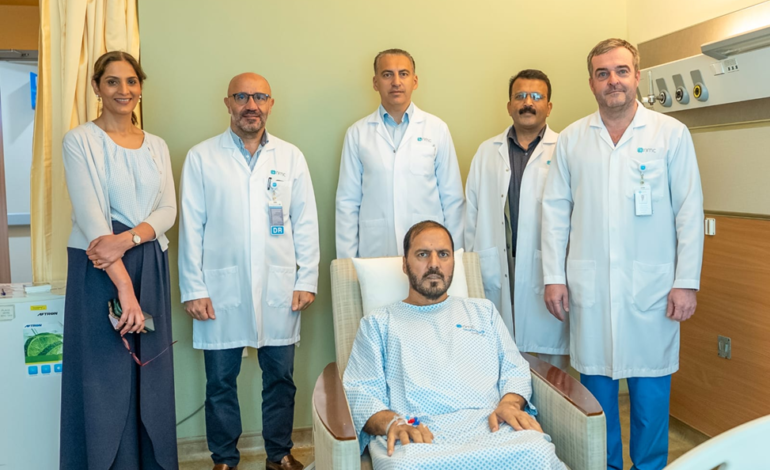

A 49-year-old Pakistani expat makes a remarkable recovery after surgeons at NMC Royal Hospital, Khalifa City, remove a 36cm tumour that had displaced several vital organs and was growing from his 12th rib into his abdomen.
Abu Dhabi, UAE – November 2026: A multidisciplinary surgical team at NMC Royal Hospital, Khalifa City, Abu Dhabi, has successfully removed an exceptionally rare cancerous tumour weighing 4.4 kilograms and measuring 36 centimetres in length from a 49-year-old Pakistani expatriate. The complex six-hour operation involved the removal of the massive tumour, which had grown from the patient’s 12th rib into his abdominal cavity, displacing several vital organs and posing significant surgical challenges.
The tumour, measuring 36 by 17 centimetres and weighing more than the average newborn baby, occupied almost the entire right side of the patient’s abdomen, extending from the diaphragm to the pelvis. Its extraordinary size had pushed the liver, stomach, intestines and other abdominal structures towards the opposite side of the body.
The case is particularly unusual because the cancer, which doctors say affects approximately one person in every two million annually, typically develops in the chest. In this patient, however, the tumour had grown into the abdomen, a presentation so uncommon that only a handful of comparable cases have been reported worldwide over the past three decades, according to the treating team.
The patient, a professional driver who has lived in the UAE since 2014, had previously worked as a farmer in Pakistan. With no significant medical history, he initially dismissed the discomfort he began experiencing on the right side of his abdomen approximately five months before seeking medical attention.
As the pain gradually intensified, he noticed a growing lump in his abdomen and experienced an unexplained weight loss of approximately eight kilograms. These symptoms eventually prompted him to seek medical advice.
Further investigations revealed the enormous mass occupying the right side of his abdominal cavity. Although doctors could not determine exactly when the tumour first developed, they believe it may have been growing silently for several years before symptoms became apparent.
Following comprehensive imaging and a detailed review by the hospital’s multidisciplinary tumour board, doctors confirmed that there was no evidence of cancer spreading to distant organs. Surgical removal was therefore recommended as the most appropriate treatment to give the patient the best possible chance of long-term survival.
However, removing a tumour of this magnitude presented considerable challenges. Its size, location and close proximity to major blood vessels and vital organs meant that even a small surgical complication could result in severe bleeding or potentially life-threatening injuries.
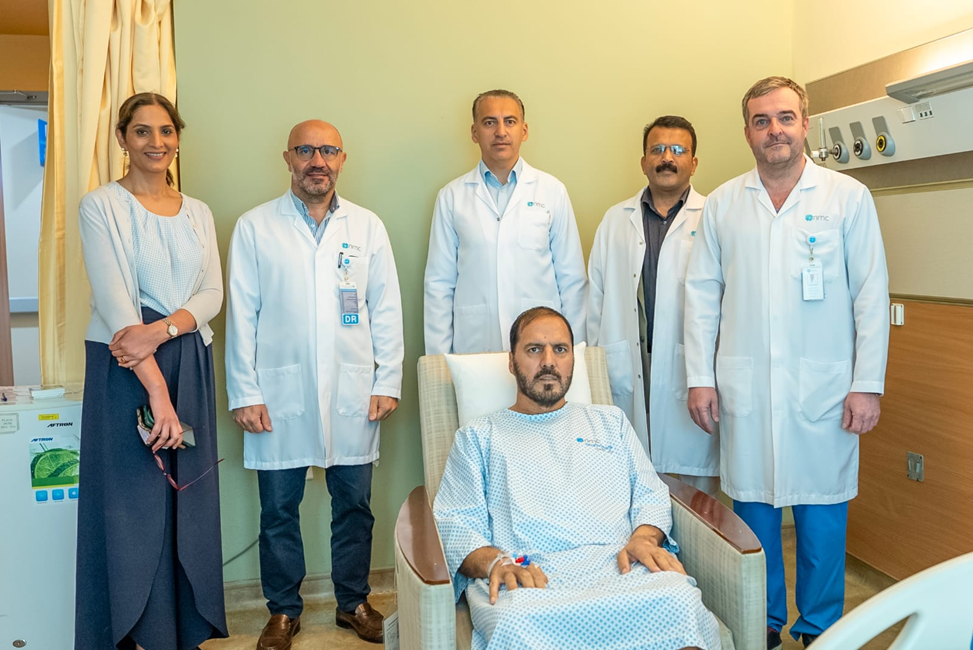
The surgical team was led by Dr Hassan Elberm, Consultant General and Hepatopancreatobiliary (HPB) Surgeon, alongside Dr Sharath Krishnan, Consultant Surgical Oncologist; Dr Haitham Gibbawi, Consultant Vascular Surgeon; Dr Juan Tova, Consultant Urologist; and Dr Ahmad Kamal, Consultant Anaesthetist.
During the six-hour procedure, surgeons carefully separated the tumour from surrounding structures while protecting major abdominal blood vessels and other vital organs.
Because the cancer had invaded the right kidney, diaphragm and surrounding abdominal wall tissues, the surgical team had to remove the affected kidney, adrenal gland, part of the diaphragm and the right 12th rib along with the tumour. This extensive procedure was necessary to achieve complete tumour removal with appropriate surgical margins and reduce the risk of cancer remaining in the affected tissues.
Despite the complexity of the operation and the significant risk of major bleeding, the surgical team successfully removed the tumour with minimal blood loss. Although multiple units of blood had been prepared as a precaution, the patient did not require a blood transfusion.
Dr Hassan Elberm, who led the operation, said the unusual size and location of the tumour made the procedure particularly demanding.
“The biggest challenge was not simply the size of the tumour, but its relationship with several vital organs and major blood vessels. It occupied a substantial part of the abdominal cavity, leaving very limited space for surgical manoeuvring. Any injury to the surrounding structures could have resulted in serious complications, including life-threatening bleeding.
“We carefully planned every stage of the operation with specialists from different surgical disciplines and prepared for several possible scenarios. Fortunately, we were able to remove the entire tumour with minimal blood loss and without the need for a blood transfusion. Achieving this outcome in such a complex case was particularly encouraging.”
Following surgery, the patient was transferred to the intensive care unit for close monitoring under the supervision of Dr Kalpana Reddy and Dr Hossam Elshekh Ali.
His recovery progressed steadily, and he was transferred to the general ward after two days. Within four days of undergoing the major operation, he was able to walk and eat independently, marking an important milestone in his recovery.
He was discharged approximately one week after surgery, with no significant postoperative complications.
Microscopic examination of the removed tissue subsequently confirmed that the cancer had originated from the 12th rib and that the tumour had been completely removed.
Dr Elberm explained that removing the affected organs was an important part of achieving the best possible surgical outcome.
“When a tumour invades surrounding organs, removing only the visible mass may leave cancerous tissue behind. In this case, we needed to remove the affected structures together with the tumour to achieve adequate surgical margins. Although this was a major operation, we expect the patient to maintain a good quality of life, provided his remaining kidney functions normally and his recovery continues as planned.”
Six weeks after surgery, the patient had recovered well enough to travel to Pakistan to reunite with his family, marking a remarkable turnaround from the months of increasing pain and uncertainty that preceded his diagnosis.
He will continue to undergo regular outpatient follow-up and surveillance imaging, with further treatment to be determined according to his clinical progress and the recommendations of the multidisciplinary oncology team.
The successful procedure highlights the importance of early medical evaluation for persistent abdominal symptoms, particularly unexplained swelling, increasing abdominal pain, palpable lumps and unintentional weight loss.
Although abdominal discomfort is common and frequently caused by non-serious conditions, doctors emphasise that persistent or progressively worsening symptoms should not be ignored.
The case also demonstrates the importance of coordinated multidisciplinary care in managing rare and complex cancers, where surgical oncology, vascular surgery, urology, anaesthesia and intensive care specialists must work together to minimise risks and improve patient outcomes.
For the patient, the successful operation has meant more than the removal of a potentially life-threatening tumour. It has allowed him to return to his family and resume his recovery after an exceptionally challenging medical journey.
ENDS


