


Fakeeh University Hospital Brings New Hope to Patients with Complex Brain Conditions Through Advanced MRI-Guided Laser Neurosurgery
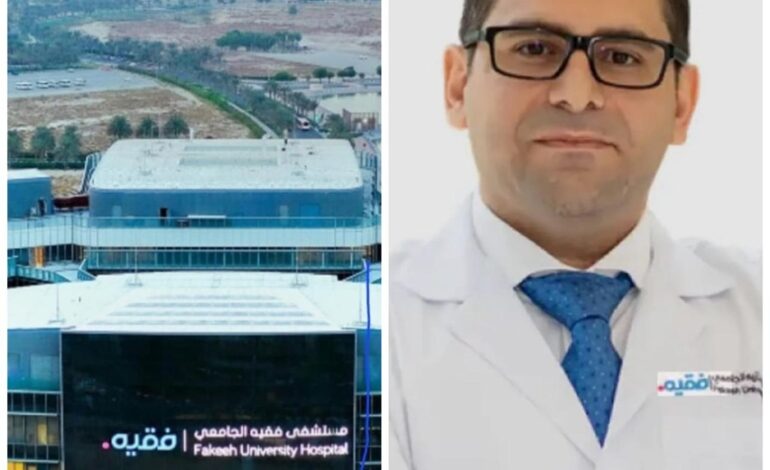

Russian teenager with high-risk brainstem tumour successfully undergoes minimally invasive laser treatment in Dubai
Dubai, UAE – June 2026 – Fakeeh University Hospital has successfully performed an advanced MRI-guided Laser Interstitial Thermal Therapy (LITT) procedure on a 15-year-old patient from Russia suffering from a brainstem glioma, one of the most challenging and high-risk brain tumours encountered in neurosurgery.
The young patient travelled to Dubai after conventional oncology treatments failed to halt the progression of the disease. The tumour, located deep within the brainstem, had caused progressive neurological deterioration, including worsening motor deficits and paralysis, significantly affecting his quality of life and presenting a complex therapeutic challenge.
Following extensive multidisciplinary discussions involving neurosurgery, neuro-oncology, radiology, and rehabilitation specialists, the medical team at Fakeeh University Hospital carefully evaluated all available treatment options. Given the tumour’s location within one of the most delicate regions of the brain, traditional open surgery was associated with exceptionally high risks.
The brainstem controls many of the body’s most vital functions, including movement, breathing, heart rate, and consciousness. Surgical intervention in this area has historically carried substantial risks, including permanent paralysis, respiratory failure, and even cardiac arrest.
To minimize these risks while offering a potential treatment option, the team elected to perform MRI-guided Laser Interstitial Thermal Therapy (LITT), a highly advanced minimally invasive neurosurgical technique increasingly used worldwide for carefully selected patients with deep-seated brain lesions.
The procedure was led by Dr. Tommaso Tufo, Consultant Neurosurgeon – Brain and Spine Surgery at Fakeeh University Hospital, using a stereotactic robotic-assisted approach. Through a small skin incision measuring only a few millimetres, a laser fibre was precisely implanted into the target area using advanced robotic guidance and neuronavigation technology.
The implantation phase lasted just over one hour, after which the patient was transferred to the MRI suite. Under continuous real-time MRI monitoring, laser thermal therapy was delivered over the course of approximately one to two hours, allowing surgeons to visualize the thermal effect in real time and precisely control the treatment zone throughout the procedure.
One of the most significant advantages of MRI-guided laser therapy is its ability to reach deep and difficult-to-access areas of the brain while minimizing disruption to surrounding healthy tissue. Real-time MRI thermal mapping provides exceptional precision, allowing surgeons to perform controlled volumetric reduction of tumours without the need for extensive surgical exposure.
Commenting on the case, Dr. Tommaso Tufo said:
“Brainstem tumours represent some of the most challenging conditions in neurosurgery because of their location within structures that control critical neurological and physiological functions. In this particular case, conventional treatment options had become limited, and traditional open surgery carried considerable risks. MRI-guided laser therapy allowed us to reach the lesion through a minimally invasive approach while maintaining a very high degree of precision and safety.”
He added:
“The successful treatment of this patient demonstrates the potential of modern laser neurosurgery to expand therapeutic options for carefully selected patients who may previously have had very limited alternatives. However, the true significance of this technology extends far beyond a single case.”
While the patient continues to undergo physiotherapy and additional oncological treatment as part of his ongoing care, he tolerated the procedure well and was able to resume mobility following treatment.
Dr. Tufo emphasized that MRI-guided Laser Interstitial Thermal Therapy should be viewed within the broader context of modern neurosurgery rather than as a solution limited to rare brainstem tumours.
“Laser neurosurgery represents an important advancement in the treatment of selected brain tumours, drug-resistant epilepsy, radiation necrosis, and other complex intracranial conditions,” he explained. “The technology allows us to treat lesions located deep within the brain through a very small incision while minimizing trauma to surrounding tissue. Both adult and pediatric patients may benefit from this approach when conventional surgery presents excessive risk.”
Historically, many patients with drug-resistant epilepsy required open cranial surgery to access and remove seizure-causing areas of the brain. Today, in selected cases, MRI-guided laser ablation offers a less invasive alternative that combines precision, safety, and shorter recovery times.
For appropriately selected patients, the minimally invasive nature of the procedure may significantly reduce hospitalization and recovery periods, with some individuals able to return home on the same day or within 24 hours. More complex cases, particularly those involving critical brain structures, may require extended monitoring to ensure optimal neurological recovery.
The introduction of advanced MRI-guided laser neurosurgery further strengthens Fakeeh University Hospital’s position as a regional center of excellence for complex neurological and neurosurgical care. By combining advanced imaging, robotic guidance, and minimally invasive techniques, the hospital continues to expand access to innovative treatment options for patients facing some of the most challenging brain conditions.
About Fakeeh University Hospital
Fakeeh University Hospital is a leading academic medical center located in Dubai Silicon Oasis and part of Fakeeh Health. The hospital combines advanced clinical care, medical education, research, innovation, and digital health technologies to deliver world-class healthcare services. Through continuous investment in cutting-edge medical technologies and multidisciplinary expertise, Fakeeh University Hospital remains committed to advancing patient care and improving outcomes across a wide range of complex medical conditions.
For more information, visit: Fakeeh Health – Advancing Healthcare with Excellence


